

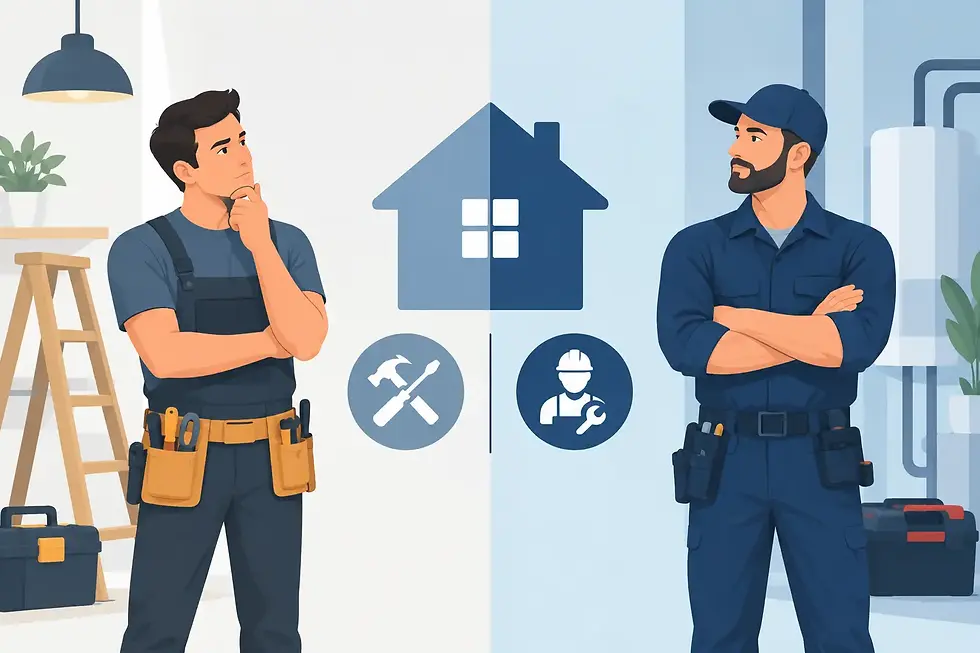
Handyman Versus Plumber: Who Should You Call?

A dripping faucet may look like a small repair until water starts collecting under the cabinet, a drain slows to a stop, or a pipe leaks behind a wall. When deciding on a handyman versus plumber, the right choice comes down to the job’s complexity, safety risk, and whether the work involves plumbing systems that require a licensed trade professional.
For Orlando-area homeowners, landlords, and property managers, the goal is simple: get the problem fixed correctly without paying for more service than the job requires. A dependable handyman is often the practical choice for straightforward repairs and related home maintenance. A plumber is the right call when water lines, drain lines, gas connections, major leaks, or code-sensitive work are involved.
Handyman Versus Plumber: The Main Difference
A handyman handles a broad range of smaller home repairs, installations, adjustments, and upkeep tasks. Their value is efficiency. If your bathroom needs several minor fixes at once, such as securing a loose cabinet door, replacing worn caulk around a fixture, hanging a mirror, and making a non-code-sensitive adjustment, one skilled professional can help you work through the list.
A plumber specializes in water supply, drainage, sewer connections, fixtures, pipes, and related systems. Licensed plumbers are trained to diagnose issues that may be hidden behind walls, under floors, or inside a drain line. They also handle work that may require permits, inspections, or compliance with local building requirements.
The distinction matters because water damage moves fast. What begins as a small leak can affect drywall, flooring, cabinets, and nearby rooms. Calling the right professional early can prevent a manageable repair from becoming an expensive restoration project.
When a Handyman Is Often the Right Call
A handyman is a good fit when the work is minor, accessible, and does not require changing plumbing lines or making a code-regulated connection. Many property owners prefer this route when they have a short list of practical repairs that can be completed in one visit.
For example, a handyman may be able to help with replacing damaged cabinet hardware, securing a loose toilet paper holder, repairing access panels, addressing minor wall damage near a fixture, replacing worn weatherstripping around an exterior door, or mounting bathroom accessories. These jobs are important to the function and appearance of a home, but they are not the same as repairing the plumbing system itself.
A handyman can also be helpful after a plumber has completed a repair. Once the source of a leak has been professionally corrected, there may be drywall patching, trim repair, cabinet adjustment, or fixture-related finishing work left behind. Coordinating those smaller tasks with one reliable local service can save time and reduce the hassle of managing multiple appointments.
For rental properties, this approach can be especially useful between tenants or when preparing for an inspection. Small maintenance issues tend to pile up. Taking care of them promptly helps keep the property functional and protects the owner’s investment.
When You Need a Plumber Instead
Call a plumber when the problem involves active water leaks, pipes, drains, sewer lines, water heaters, shutoff valves, or new plumbing connections. These are not jobs to guess at, especially when the issue could cause property damage or create a safety concern.
A plumber is generally the safer choice if you notice low water pressure throughout the home, water discoloration, recurring drain backups, sewage odors, a leak from a pipe, a leaking water heater, or water appearing where it should not be. The same applies if a toilet repeatedly backs up, a drain clogs again soon after being cleared, or you suspect a hidden leak behind a wall.
Major fixture replacement can also require a plumber, depending on what is being changed and how the existing connections are configured. A new sink, toilet, shower valve, dishwasher connection, or water heater may involve supply lines, drain lines, venting, shutoff valves, permits, or local code requirements. A licensed plumber can determine the proper scope before work begins.
Do not wait on urgent water problems. Turn off the nearest shutoff valve if it is safe and accessible. If you cannot stop the flow, shut off the home’s main water supply and contact a plumber right away. Fast action can limit damage to floors, walls, cabinets, and adjacent units.
Why Licensing and Scope Matter
Not every repair is simply a matter of having the right tools. Plumbing work can affect water quality, drainage, pressure, structural areas, and other parts of the home. In Florida, licensing and permit requirements may apply based on the specific work being performed.
That is why a professional handyman should know when to recommend a plumber rather than take on a job outside the appropriate scope. This is not a limitation. It is a sign of responsible service. You want someone who protects your property, respects the rules that apply to the work, and focuses on a lasting result.
How to Decide Before You Schedule Service
Start by asking one practical question: Is the problem with the plumbing system, or is it a repair around the plumbing system?
If water is leaking from a pipe, a fixture is not draining, pressure has changed, or the issue involves a supply or drain connection, start with a plumber. If the task involves damaged trim, loose hardware, access covers, wall repairs, mounting, assembly, or other general maintenance near the affected area, a handyman may be the better fit.
Photos can help when requesting a quote, but do not rely on a photo alone to diagnose a water issue. A slow drain, a soft spot in a cabinet, or a stain on the ceiling may point to a larger problem out of sight. Be clear about when you first noticed the issue, whether it is getting worse, and whether water is still present.
For property managers, it also helps to separate emergency work from routine work. An active leak or sewer backup needs immediate plumbing attention. A list of small repairs in a bathroom or kitchen can often be scheduled as a handyman visit. That distinction keeps tenants safer and helps prevent avoidable downtime.
A Smarter Plan for Multi-Task Home Repairs
The best service decision is not always about choosing one professional forever. It is about bringing in the right person at the right stage.
A plumber can address the source of a pipe leak or drainage issue. Then a handyman can take care of the surrounding repairs that bring the room back into working order. This sequence protects the repair from being covered up too soon and keeps each part of the job in qualified hands.
When you call for service, describe the full list of concerns instead of mentioning only the most obvious one. A loose vanity, damaged drywall, missing hardware, and a leaking shutoff valve may look like one bathroom project, but they may require two different service scopes. A clear conversation up front prevents surprises and helps you schedule efficiently.
Prowood Handyman, LLC provides insured, professional help for the everyday repair and upkeep tasks that keep homes and residential properties in shape. When a job calls for a licensed plumber, choosing that specialist first is the dependable move.
A small household problem does not need to become a long-running to-do item. Identify whether the issue is plumbing-system work or general repair work, act quickly when water is involved, and get the right professional on the job. Let’s get it fixed.


Comments