

Handyman Versus Contractor for Repairs Explained

A loose cabinet door, damaged drywall, a leaking fixture, and a room full of boxes waiting on assembly can all feel urgent when they interrupt your routine. The handyman versus contractor for repairs question comes down to more than price. It is about matching the size, risk, and technical demands of the job with the right professional from the start.
For many home and rental-property repairs, a skilled handyman is the practical choice. For major renovations, structural damage, or work that requires permits and licensed trades, a contractor is usually the better fit. Knowing the difference helps you avoid delays, duplicate service calls, and repairs that do not hold up.
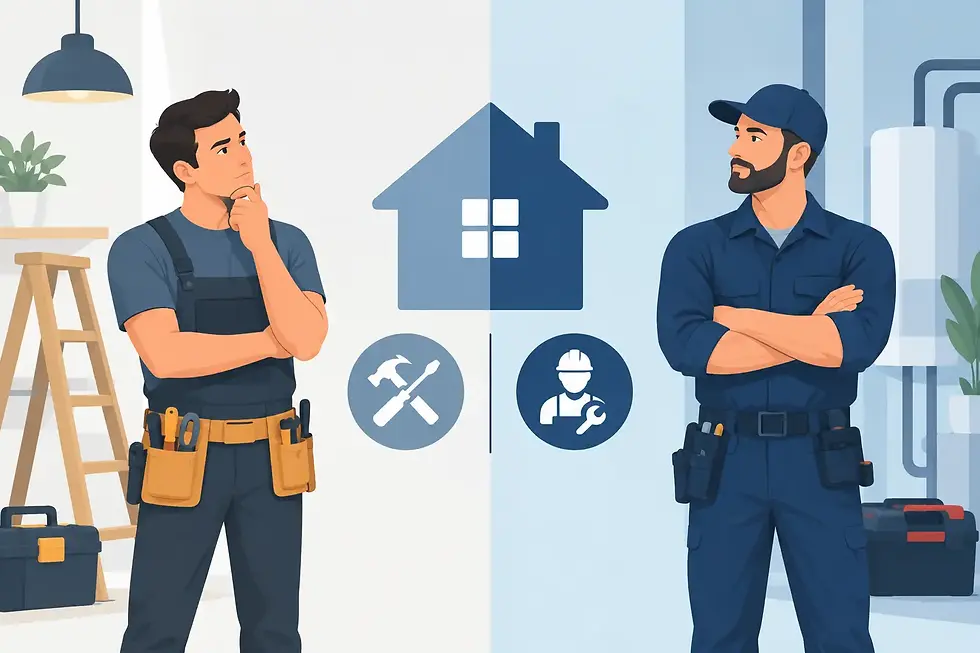
Handyman versus contractor for repairs: the main difference
A handyman typically handles a wide range of smaller repair, installation, assembly, and general upkeep tasks. The value is convenience. Instead of contacting separate specialists for several minor issues, you can often schedule one reliable professional to work through a practical punch list during a single visit.
A contractor generally manages larger, more specialized projects. Depending on the work, that may include renovation planning, permits, inspections, subcontractors, materials coordination, and licensed trade work. Contractors are built for projects with more moving parts, higher costs, and stricter code requirements.
Neither choice is automatically better. A contractor may be overqualified and more expensive for a few household fixes. A handyman should not be asked to take on work that is outside their legal scope, requires a permit, or creates a serious safety concern. The right call depends on the repair in front of you.
When a handyman is the right call
A handyman is often the best fit when the job is straightforward, limited in scale, and does not require major alterations to a home's systems or structure. These are the repairs that can pile up while you are busy managing work, family, or a rental property.
Common handyman jobs include repairing doors and trim, patching minor wall damage, replacing hardware, mounting shelves or televisions, installing blinds, assembling furniture, repairing fence sections, replacing caulk, and completing small exterior fixes. A handyman can also help with several unrelated tasks at once, which saves you from arranging multiple appointments.
This is especially helpful for landlords and property managers between tenants. A unit may need a handful of small repairs before it is ready for the next resident. One insured handyman service can address the list efficiently and give you a clear point of contact.
A handyman is also a smart choice when you know what needs attention but do not have the time, tools, or confidence to tackle it yourself. The goal is not to turn every minor repair into a major project. It is to get the work completed professionally before a small issue becomes a larger one.
The advantage of a multi-task visit
Consider a homeowner with a sticking interior door, loose towel bar, damaged baseboard, and unassembled storage cabinet. None of those items alone may justify calling a specialty contractor. Together, they make an ideal handyman visit.
Before booking, make a written list and take a few photos of the problem areas. This gives the service provider a better view of the work and helps them prepare the right tools and materials. It also makes it easier to prioritize what needs to be fixed first.
When you should hire a contractor
A contractor is the better choice when a repair involves structural changes, extensive water damage, major remodeling, or systems that fall under licensing and permit requirements. These projects may need plans, inspections, code knowledge, and coordination among multiple trades.
Call a contractor or appropriately licensed specialist when you are dealing with significant roof damage, foundation concerns, major framing work, large-scale remodeling, new plumbing lines, substantial electrical changes, or HVAC system work. If a repair affects the safety, stability, or core systems of the property, it deserves a higher level of review.
Permits are another clear signal. Requirements vary by location and project, so do not assume a project is too small to trigger local rules. A qualified contractor can determine whether permits or inspections are needed and can help ensure the work is completed correctly.
It is also wise to bring in a contractor when the source of the problem is unclear. A stain on a ceiling, for example, may look like a simple drywall repair. But if the moisture source is active or the damage is widespread, repairing the surface alone will not solve the real issue. The cause needs to be identified first.
Four signs the job has outgrown a handyman visit
The repair involves a permit, inspection, or licensed electrical, plumbing, or HVAC work.
Damage affects the foundation, framing, roof structure, or another safety-critical part of the home.
The project requires a detailed design, multiple crews, or a significant construction schedule.
The visible problem may be hiding ongoing water intrusion, code issues, or extensive damage behind walls.
These situations do not mean you need to panic. They simply call for the right level of expertise before work begins.
Compare cost by value, not just the first quote
The lowest estimate is not always the least expensive solution. A handyman may offer better value for a short list of repairs because you are paying for efficient labor across several tasks rather than separate minimum service charges from multiple specialists.
For a larger project, a contractor's higher estimate may reflect project management, licensed labor, permits, insurance requirements, specialized equipment, and a more formal work scope. Those costs can be necessary protections when the job has greater risk or complexity.
Ask what is included before comparing quotes. Find out whether materials are included, whether there is a minimum service charge, how unexpected conditions are handled, and what work is specifically excluded. A clear scope prevents the frustrating moment when you assumed a repair included one thing and the provider priced another.
For rental owners, consider the cost of delay as well. A small repair that holds up a move-in, frustrates a tenant, or turns into a larger maintenance issue can cost more than addressing it promptly. Reliable work is part of protecting the property.
Questions to ask before scheduling repair work
Start with a simple description of the issue, then ask whether the job falls within the provider's scope. A professional handyman should be direct about what they can complete and when a licensed contractor or specialist is needed.
You should also ask whether the business is insured, how the estimate is structured, what materials you need to provide, and how long the work is expected to take. For larger work, ask about permits, licensing, project timeline, and who will be responsible for each phase.
Photos and measurements are useful, but do not hide details to make a repair sound smaller. Mention prior repairs, recurring leaks, unusual sounds, or any signs that the issue has changed over time. Accurate information leads to a more accurate recommendation.
Choose the professional who solves the actual problem
The handyman versus contractor for repairs decision is really a scope decision. Choose a handyman for practical, smaller repairs and multi-item maintenance lists. Choose a contractor when the job is major, regulated, structural, or specialized.
For homeowners and property owners in Orlando and nearby communities, Prowood Handyman, LLC provides insured, dependable help for the everyday repairs that keep a home functional and in good condition. When the work is within a handyman's scope, getting it handled early can save time and prevent a growing list of unfinished tasks.
If you are unsure which professional you need, start by describing the issue clearly and asking the question. A trustworthy service provider will help you make the right call, not push the wrong job. Let's get it fixed.


Comments